When a dog won't take a treat
May 27, 2026

At the vet, in a busy street, on a first visit to someone else's house — a dog who reliably takes food at home will sometimes refuse it flatly. People read this as stubbornness. It is almost never that.
Appetite is one of the first things to go
When a dog is frightened or over-aroused, the systems that handle digestion get deprioritised. They are not being difficult; the part of them that wants food has temporarily gone offline.
Trainers use this as a gauge. If your dog will take a treat, they are coping. If your dog will not take the treat they would normally cross a room for, you are asking too much of them right where you are standing.
What to do with that information
Increase the distance. Move further from whatever it is — the other dog, the traffic, the hand reaching toward them — until the treat becomes interesting again. That distance is your working range, and it tells you where training can actually happen.
Pushing on and hoping they settle usually makes the association worse rather than better.
Other things worth ruling out
A dog who refuses food at home, in a quiet room, with nothing going on, is a different situation. Appetite loss over a day or more, or alongside lethargy, vomiting or any change in drinking, is a call to the vet rather than a training question.
Mouth pain also presents as refusal — see the piece on older dogs and worn teeth.
The version at home
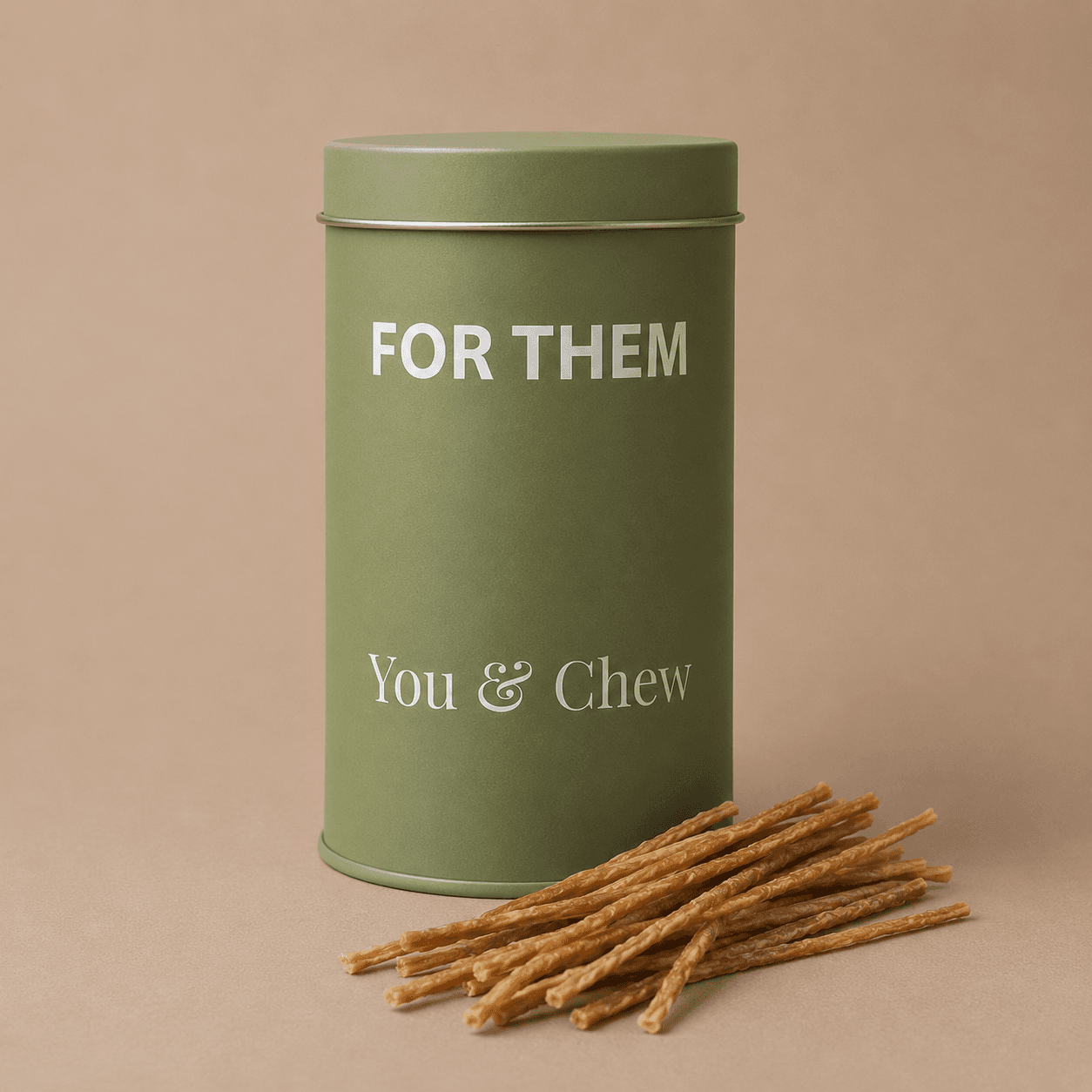
This is also why the two-tin ritual works better than handing something over in passing. Sitting down, opening both lids, and taking a minute over it is a calm signal in itself. Most dogs read the ceremony before they read the food.
Not veterinary advice
We make treats, not diagnoses. This is general information, not a substitute for your vet, who knows your dog and we do not. If something is wrong — or you are unsure whether it is — call them rather than a website.