Hard chews and cracked teeth
June 28, 2026
The big chewing teeth toward the back of a dog's mouth — the carnassials — do the heavy work, and they are the ones that break. The usual injury is a slab fracture: the dog bites down on something unyielding at the wrong angle and a flake of tooth shears off the side.
It is painful, it often exposes the pulp, and the fix is a root canal or an extraction. Neither is cheap and neither is quick.
The usual suspects
Veterinary dentists name the same offenders repeatedly: antlers, cow hooves, hard nylon bones, real bones, and — genuinely — ice cubes and rocks. Antlers in particular have become one of the most common causes, largely because they are marketed on the very quality that makes them dangerous. Durable means it does not give. If it does not give, the tooth does.
The two tests
The knee test: if you would not be happy having the chew swung against your kneecap, it is too hard for your dog's teeth.
The thumbnail test: press a nail into it. If you cannot leave a mark, neither can your dog without risking one.
The hammer version is blunter still — if you could drive a nail with it, do not let your dog chew it.
Where a dried treat sits
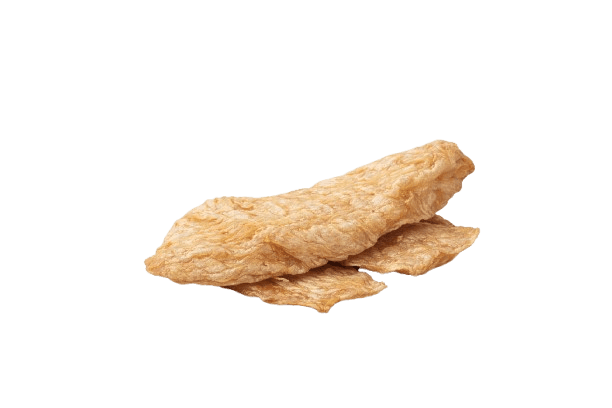
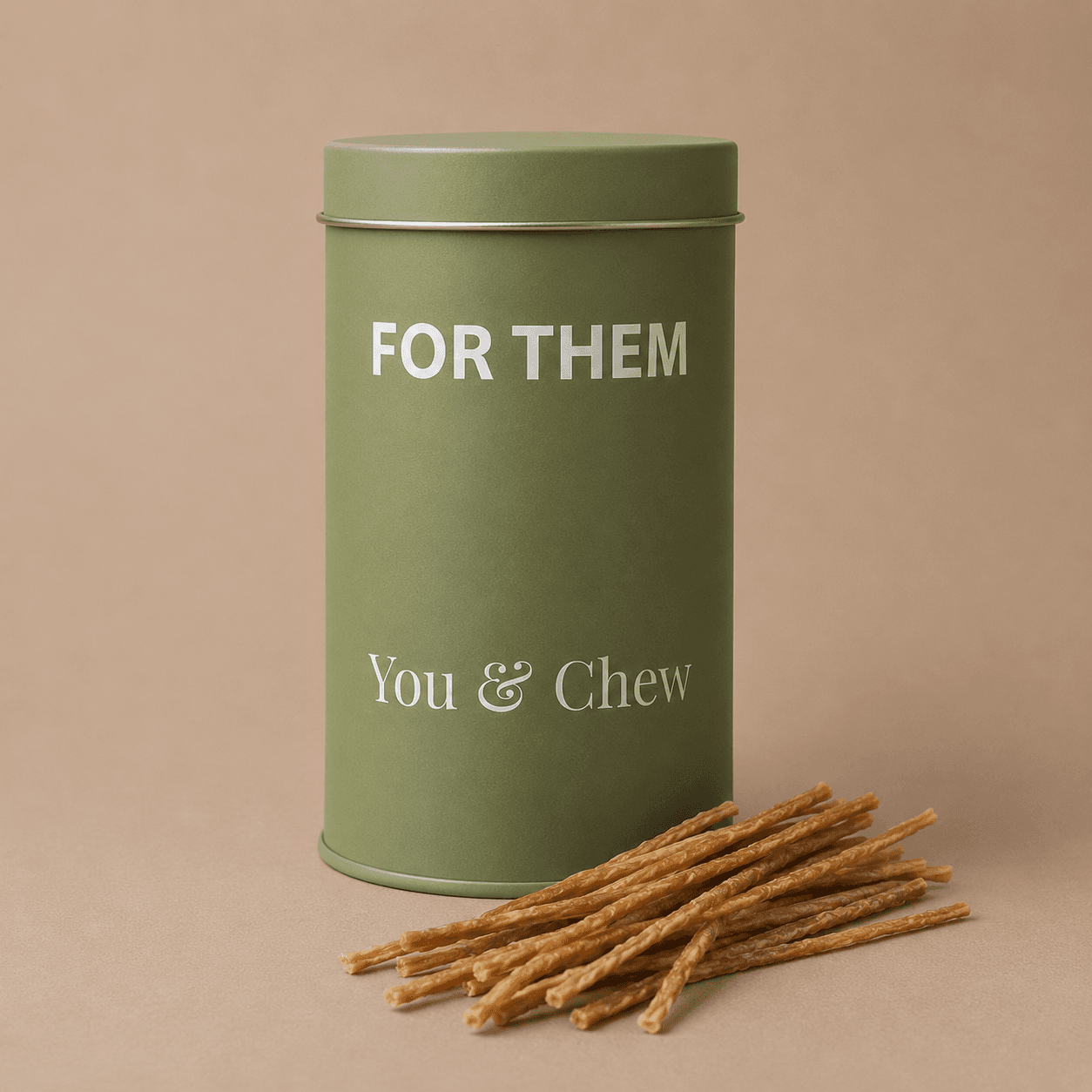
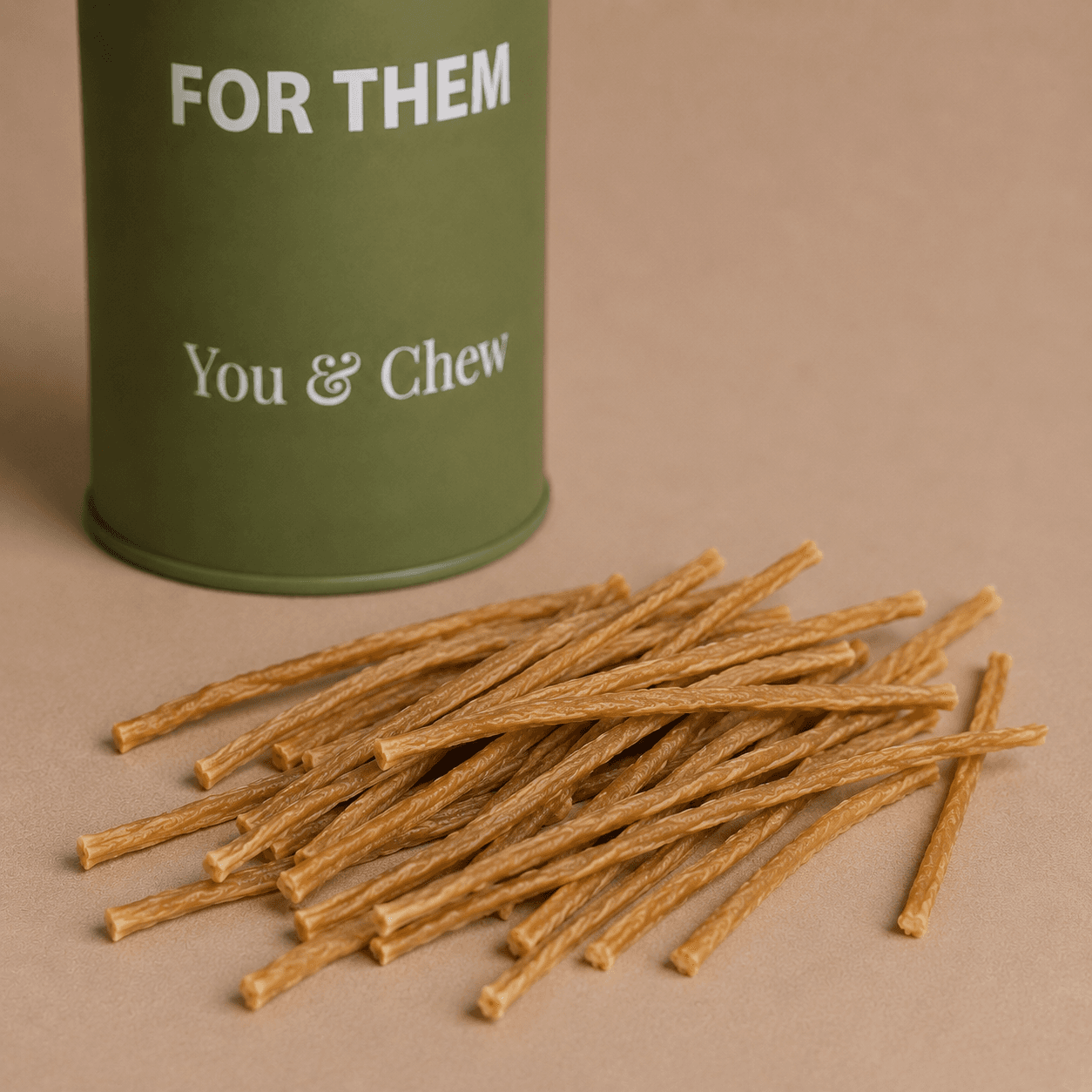
Dehydrated chicken is brittle rather than hard, and the distinction matters. Brittle means it fractures under pressure — it gives way before the tooth does. That is the behaviour you want.
It is a treat you can hand over without doing the arithmetic on what it might cost you at the dentist.
Supervise any chew, break pieces down for small dogs and hard chewers, and if your dog is a determined destroyer of everything, that is worth mentioning at their next check-up.
Not veterinary advice
We make treats, not diagnoses. This is general information, not a substitute for your vet, who knows your dog and we do not. If something is wrong — or you are unsure whether it is — call them rather than a website.